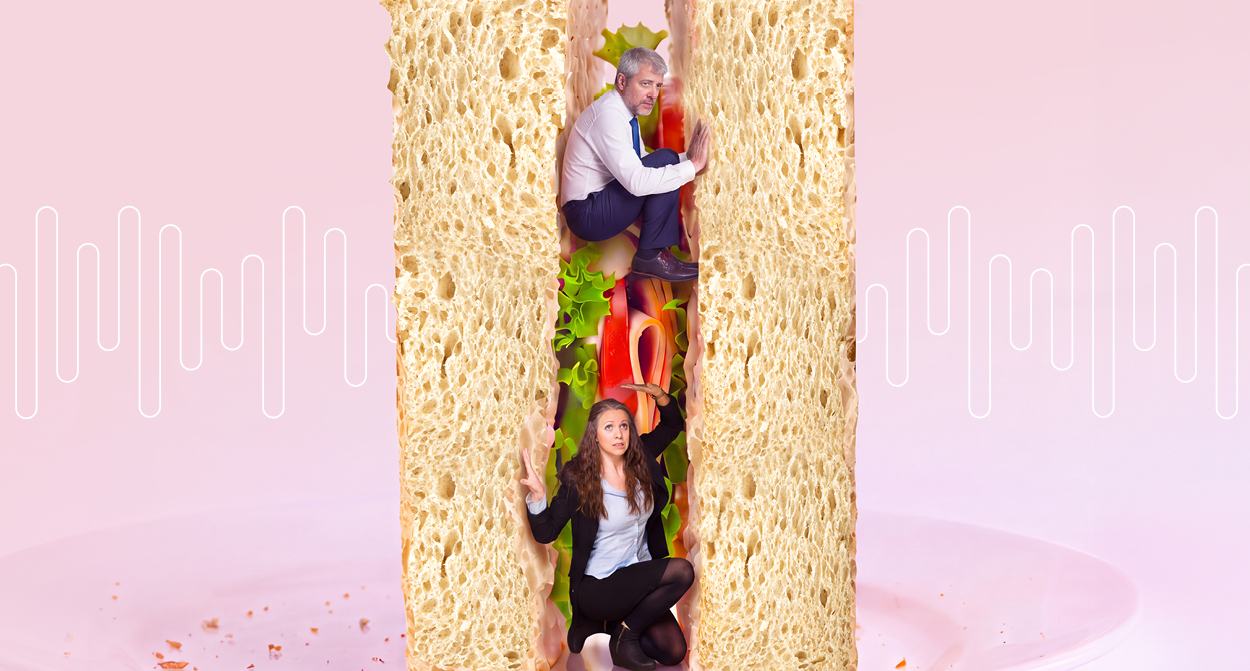
Gen X employees are feeling the squeeze. As well as being at the peak of their careers, they’re juggling the demands of teenage or young adult offspring against the very different needs of increasingly dependent, aging parents.
So where does that leave their own health and wellbeing? Often at the bottom of an overwhelming pile. It’s a universal problem, but as Open Enrollment (OE) looms in the US, when employees select their healthcare choices for the year ahead, the challenge of protecting and promoting Gen X wellbeing becomes even more pressing.
Why Gen X matters
Employee engagement initiatives around benefits often focus on capturing the attention of Gen Z or retaining powerhouse Millennials. But according to the US Department of Labor, Gen X employees account for around 31% of the workforce, making them the second-largest generation at work, after Millennials.
And they’re increasingly the people in charge, accounting for more than half of managers and leaders in many organisations. As Boomers retire, Gen X employees carry a lot of indispensable knowledge and experience, making them both highly valuable and rather vulnerable. They're carrying significant responsibilities at work, while often putting the needs of children, parents and partners ahead of their own.
Bandwidth battles
Hours spent caring are often the equivalent of a demanding second job. Sandwich generation employees aren’t disengaged because they don’t understand benefits in principle; they’re simply time poor and wiped out through decision fatigue, financial and emotional stress.
They may even be forced to reduce their working hours to meet caring commitments. 53% of UK sandwich carers say they can’t work as much as they’d like – and that figure rises to 74% for those providing more than 20 hours of care a week.
Small wonder that the same Office of National Statistics research uncovered 31% show signs of depression or anxiety, compared to 24% of the general population.
Something has to give. Too often, it’s their own health, financial wellbeing, retirement planning or protection needs.
The benefits paradox
Anyone not caught up in the burnout of the sandwich generation can spot the obvious irony: these are the very people that have the most to gain by engaging with OE and benefits reviews.
Healthcare plans, dependant or elder care resources, mental health provision, financial wellbeing tools, flexible working and employee assistance programmes are all tailor-made to relieve exactly this pressure.
In practice, they’re often blind to the benefits, seeing OE and claim forms as just another job to add to the pressure.
Lead with life
Organisations can do more to overcome these barriers and connect Gen X employees with the support already available to them.
One approach is to lead with life. The OE window dates are important but they’re not as important as active engagement. Instead of hitting colleagues with the double whammy of a task and a deadline (do this hard thing by this short deadline) make real life your hook:
Are you supporting elderly parents?
Are you struggling to balance work with caregiving?
Do you sometimes just need someone to listen?
To make this approach even more effective, see if you can segment internal audiences by life stage, instead of simply by grade or location. A generic, all-hands benefits email is, by definition, generic. Targeted caregiver communication gives you a more direct connection and is more likely to achieve the behaviour change you’re looking for.
And you can make that hard job feel easier by shrinking the decisions that need to be made. Replace a daunting laundry list of options with summaries such as ‘top three things to check’. This will make the task feel less mountainous by focusing on the true priorities. A 2026 study found that 46% of US employees had no guidance for their latest enrollment and 32% regret the choices they made. The problem isn’t a lack of information – it’s about making that information simple, relevant and targeted.
Put your own mask on first
It’s become a cliche because it’s true: looking after yourself is the most important thing you can do for everyone depending on you.
Get that message right and you have a strategic opportunity to support a high performing third of your workforce, improve benefits engagement and retain the experienced leaders your organisation depends on.
More insights